Game Development & Design
Is Game Development A Good Career In India? Salary, Scope & Roadmap
Is game development a good career in India? See real salary data, top roles, required skills, and a step-by-step roadmap to get job-ready.

Game Development & Design
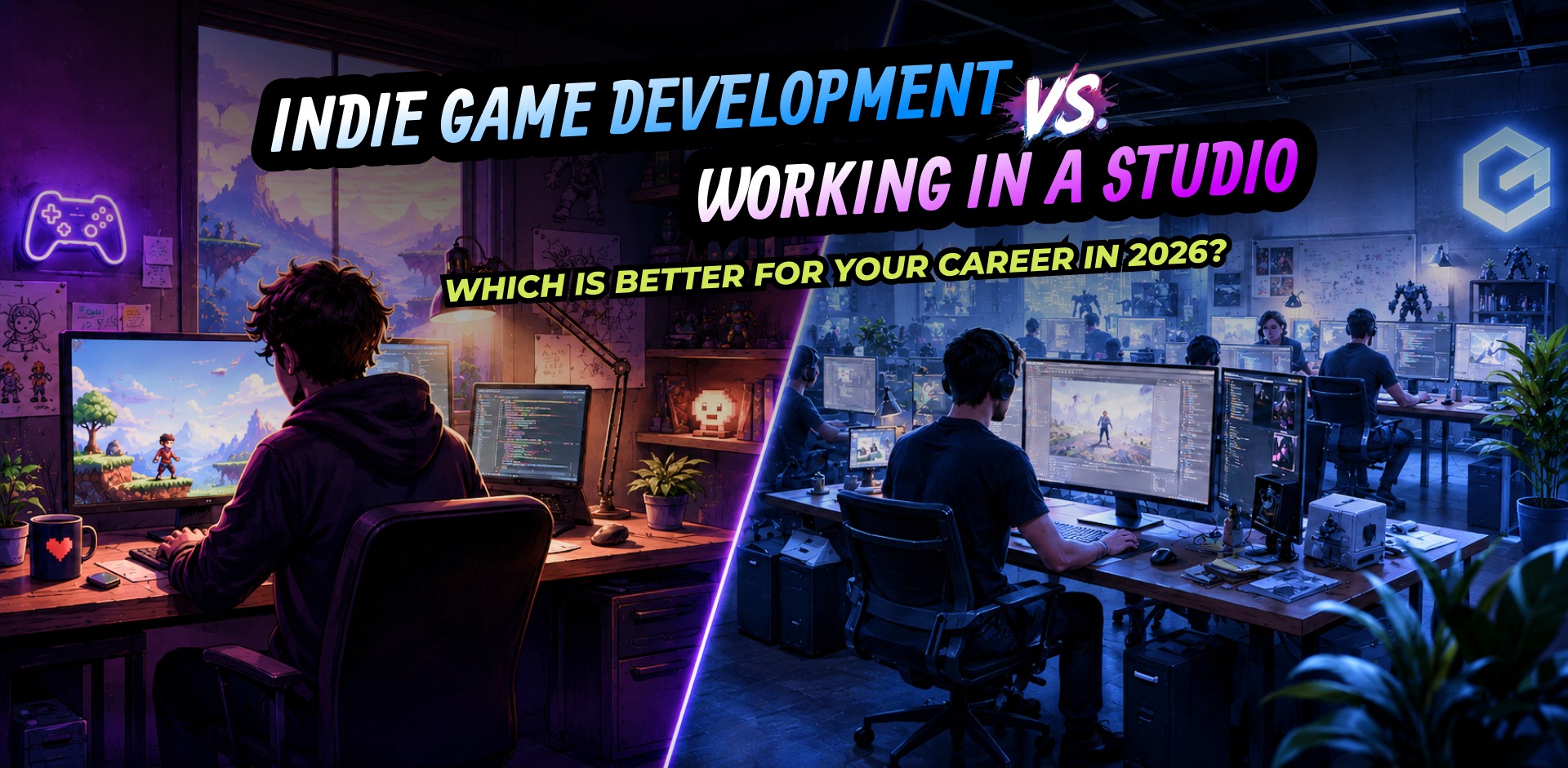
Compare indie game development vs studio careers in 2026 across pay, skills, creative control, work-life balance, networking, and options for students for 2026.

BY: Admin
17 March 2026•5 min read
The gaming industry in 2026 is unrecognizable compared to a decade ago. We’ve seen the rise of "Hyper-Indies," the consolidation of massive AAA combinations, and a middle-market that is more competitive than ever. For a student , the graduation horizon brings a frightening question: Do you find a seat on a massive corporate ship, or do you build your own raft?
This choice isn't just about where you sit from 9 to 5; it’s about the course of your professional DNA. Game dev for students has evolved, it's no longer just about learning to code; it's about choosing a lifestyle. Do you want to be the world's leading expert on realistic hair physics, or do you want to be the innovative who decides how a whole world feels to play? In this guide, we’re going to inspect the two paths across five critical pillars: Financial Security, Skill Acquisition, Creative Ownership, Networking, and Long-term Marketability.
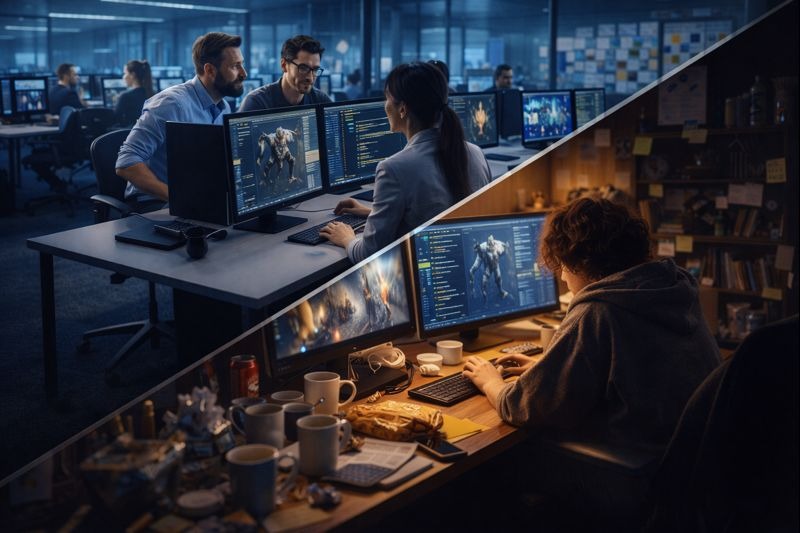
The most immediate difference between an indie game dev life and a game studio career is the bank account.
The Studio Path: In 2026, working for an established studio (Ubisoft, Rockstar, or Carina Softlabs Inc.) offers a "Safety Net" model. You receive a handsome salary, health insurance, and performance bonuses. For many, this stability is the foundation that allows them to focus purely on their craft. However, the "Golden Cage" effect is real, your earning potential is controlled by corporate ladders and annual raises.
The Indie Path: Indie development is "High-Stakes Poker." You are often self-funded or dependent on small grants and Early Access sales. Your "salary" is whatever is left after the Steam or Epic Games Store takes their 30% cut. While the floor is zero, the ceiling is infinite. A viral indie hit can generate more wealth in three months than a experienced studio earns in twenty years. But you must be prepared for the "Burn Rate", how many months can you survive before your game turns a profit?

This is where your daily work life differs the most.
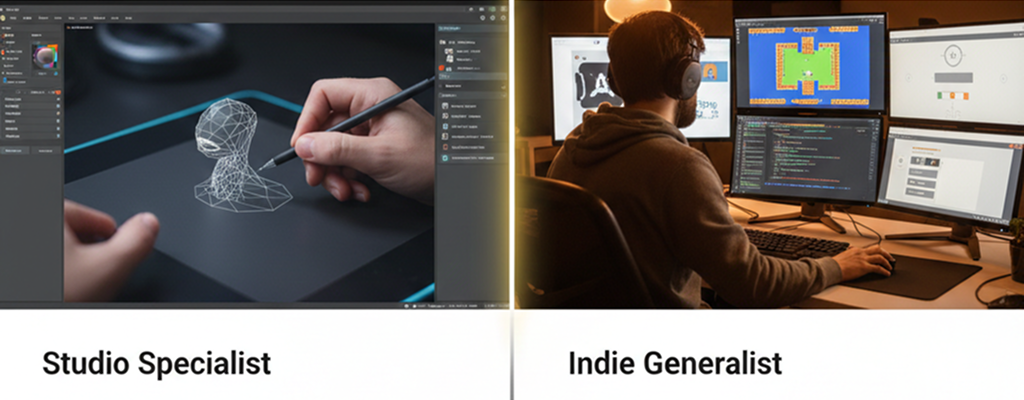
The Studio Specialist: Large studios require extreme specialization. You might spend six months perfecting the UI/UX of a single inventory menu for a massive RPG.
The Benefit: You become elite. You learn the "Pro" way to do things, version control at scale, high-end optimization, and working within rigid technical restrictions.
The Risk: You might become a "Fossilized Expert." If you only know how to do one specific thing, you might find it hard to pivot if that technology becomes obsolete.
The Indie Generalist: When you’re an indie game dev, you are the Creative Director, the Lead Programmer, the Sound Designer, and the QA Tester.
The Benefit: You gain a "God’s Eye View" of game development. You understand how the code affects the art, and how the art affects the user experience. This makes you incredibly versatile.
The Risk: "Master of none." You might produce work that is "good enough" across the board but lacks the polished sheen required for high-end professional roles.
Who owns the "Soul" of the game?
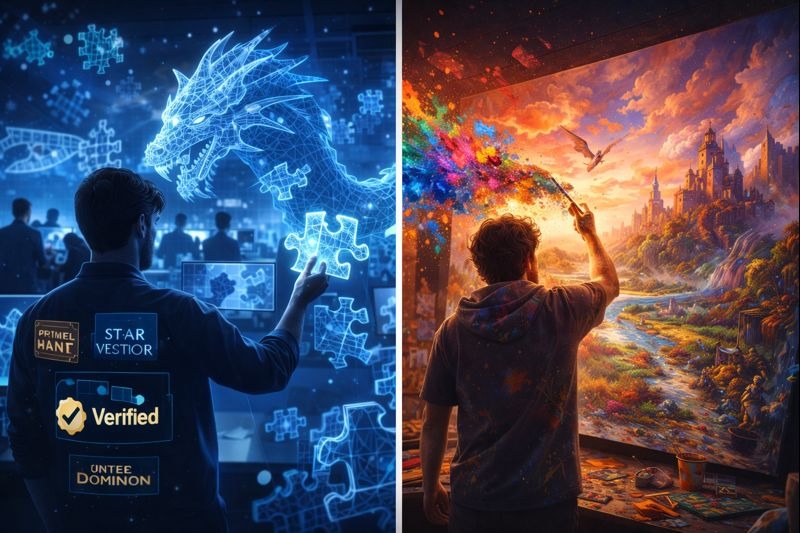
Studio Work: In a studio, you are executing someone else’s vision. You are a highly skilled artist helping to build a masterpiece designed by an architect you might never meet. While you can suggest ideas, the "Creative Director" has the final word. For some, this is a relief, the pressure of the "Big Idea" isn't on them. For others, it leads to burnout.
Indie Work: The vision is yours. If you want to make a game about a toaster navigating a science fiction kitchen, nobody can tell you "no." This creative approach is the primary reason designers choose the indie route. However, creative freedom comes with the burden of Mental and Emotion Exhaustion. When every choice, from the color of a button to the gravity of a jump, is yours, the weight can be paralyzing.
The industry has a reputation for "Crunch pressure," but the source of that stress varies by path.
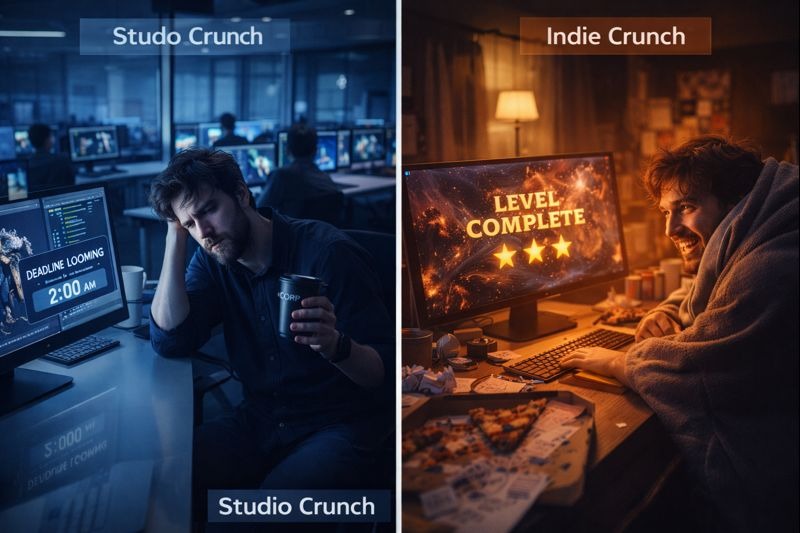
Studio Life: In a game studio career, pressure is often structured. It’s driven by publisher deadlines, marketing beats, and holiday release windows. However, 2026 has seen better labor laws and integrating efforts in major studios, leading to "protected" weekends.
Indie Life: For an indie game dev, crunch is personal. You aren't working late because a boss told you to; you’re working late because if the bug isn't fixed, you don't eat next month. The boundary between "life" and "work" often disappears entirely in indie development.
In 2026, who you know is as important as what you can code.
The Studio "Club": Working at a studio gives you instant access to a network of hundreds of professionals. Your coworkers will eventually move to other studios, creating a "Spiderweb Network" that ensures you are never more than one phone call away from your next job. The studio name on your LinkedIn acts as a seal of quality.
The Indie "Tribe": Indie networking happens in Discord servers, at X (Twitter) hashtags, and at festivals like PAX or GDC. It is a community built on mutual struggle and shared passion. While indie networking is more "authentic," it lacks the institutional power of the studio network. You have to work twice as hard to get your name in front of the right people.

At The Upthrust, we believe that game dev for students shouldn't be about picking a side forever. It's about building a toolkit that works for both.
Choose the Studio path if you want to be part of something massive, learn from world-class mentors, and enjoy the perks of a corporate structure.
Choose the Indie path if you are a self-starter who thrives on variety and wants to own every pixel of your creation.
The best part? You can always switch. Many of today’s greatest indie hits were made by ex-AAA developers, and many studio leads started as solo indie creators.
Ready to start your Game Development journey? Check out our latest batches at The Upthrust and let’s turn your creativity into a high-growth career. Whether you’re a complete beginner or looking to upgrade your skills for 2026, we have a seat waiting for you.
[Explore Game Dev Courses at The Upthrust] [Talk to a Career Counselor Today]
Book a free counselling session with our mentors
Explore trending topics and fresh ideas. Grow your knowledge with every article.
Is game development a good career in India? See real salary data, top roles, required skills, and a step-by-step roadmap to get job-ready.

Curious about how AI is changing game development? Step inside the daily routine of a game developer in 2026 and learn how to future-proof your gaming career.
Practical game development and marketing tips in your inbox every week.