Game Development & Design
Is Game Development A Good Career In India? Salary, Scope & Roadmap
Is game development a good career in India? See real salary data, top roles, required skills, and a step-by-step roadmap to get job-ready.

Game Development & Design
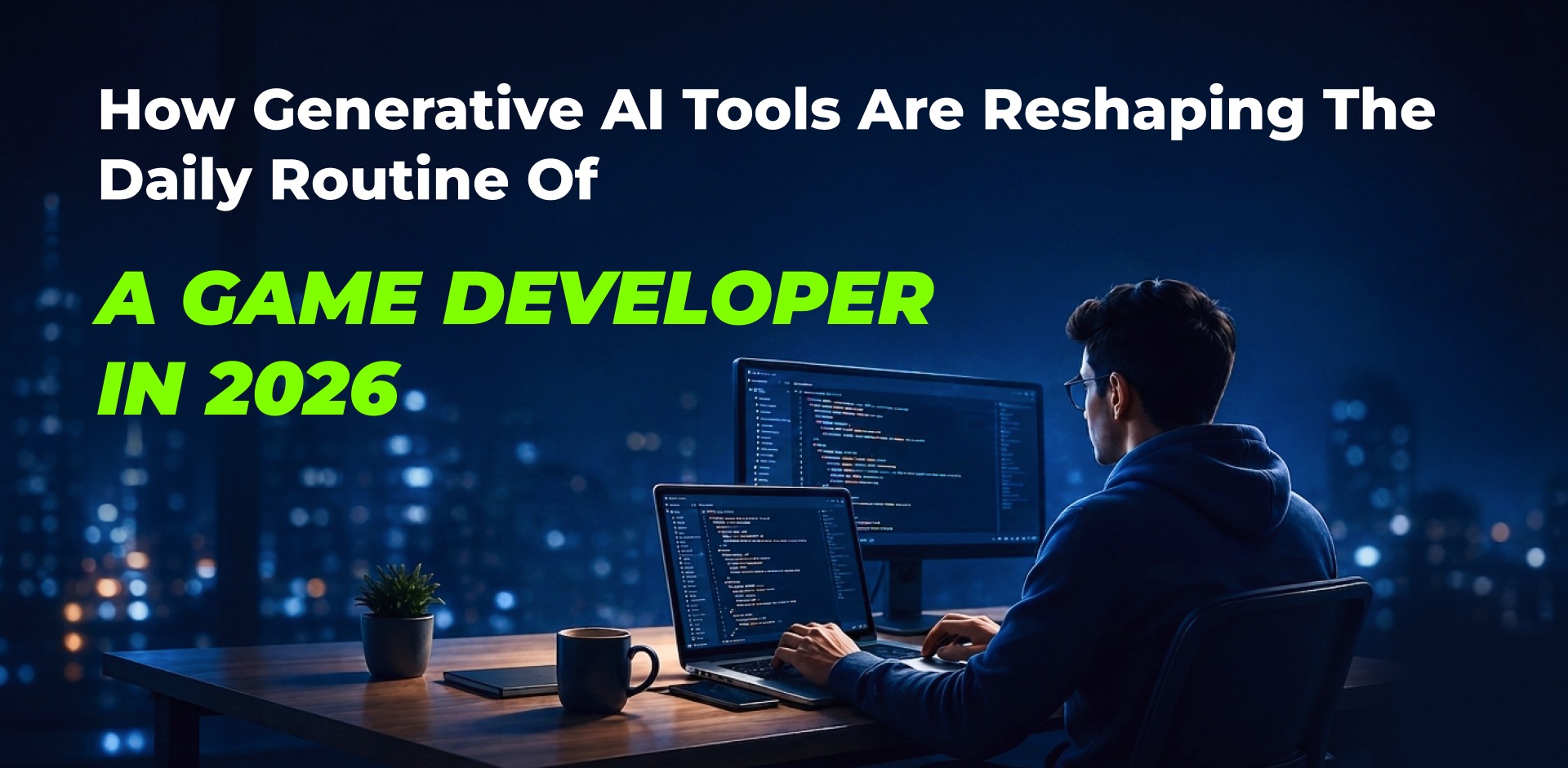
Curious about how AI is changing game development? Step inside the daily routine of a game developer in 2026 and learn how to future-proof your gaming career.

BY: Admin
26 August 2026•5 min read
The gaming industry is facing a massive shift. If you are planning a career in game development, you have likely asked yourself: Will AI take my job before I even graduate?
The short answer is no. AI is not replacing game developers. However, developers who use AI are rapidly replacing those who do not.
In 2026, the daily routine of a game developer looks vastly different than it did just a few years ago. Generative AI tools have evolved from experimental novelty programs into mandatory, everyday workplace assistants. Instead of killing creativity, these tools are eliminating the tedious grunt work, allowing creators to focus on what truly matters: making games fun.
Here is a look inside the daily workflow of a modern game developer and how you can train yourself to thrive in this new landscape.
In the past, a game programmer’s morning often began with staring at hundreds of lines of boilerplate code or hunting down a missing semicolon. Today, developers start their day collaborating with AI pair programmers like GitHub Copilot and custom Unreal Engine LLM plug-ins.
Rapid Prototyping: Instead of writing complex physics scripts from scratch, a developer can prompt an AI assistant: "Write a C++ script for a double-jump mechanic with a decaying gravity arc in Unreal Engine 5." The AI generates the foundational code in seconds.
Instant Debugging: When an error crash occurs, developers paste the log into an AI debugging tool. The tool instantly highlights the logic flaw and suggests three optimized fixes.
The Career Shift: You no longer need to be a human dictionary of syntax. The value of a 2026 developer lies in system architecture—understanding how different game systems connect, troubleshooting logic, and refining the player experience.
Building a massive, immersive open world used to require an army of environment artists and weeks of manual asset placement. Today’s level designers use generative AI pipelines to "gray-box" and populate worlds at lightning speed.
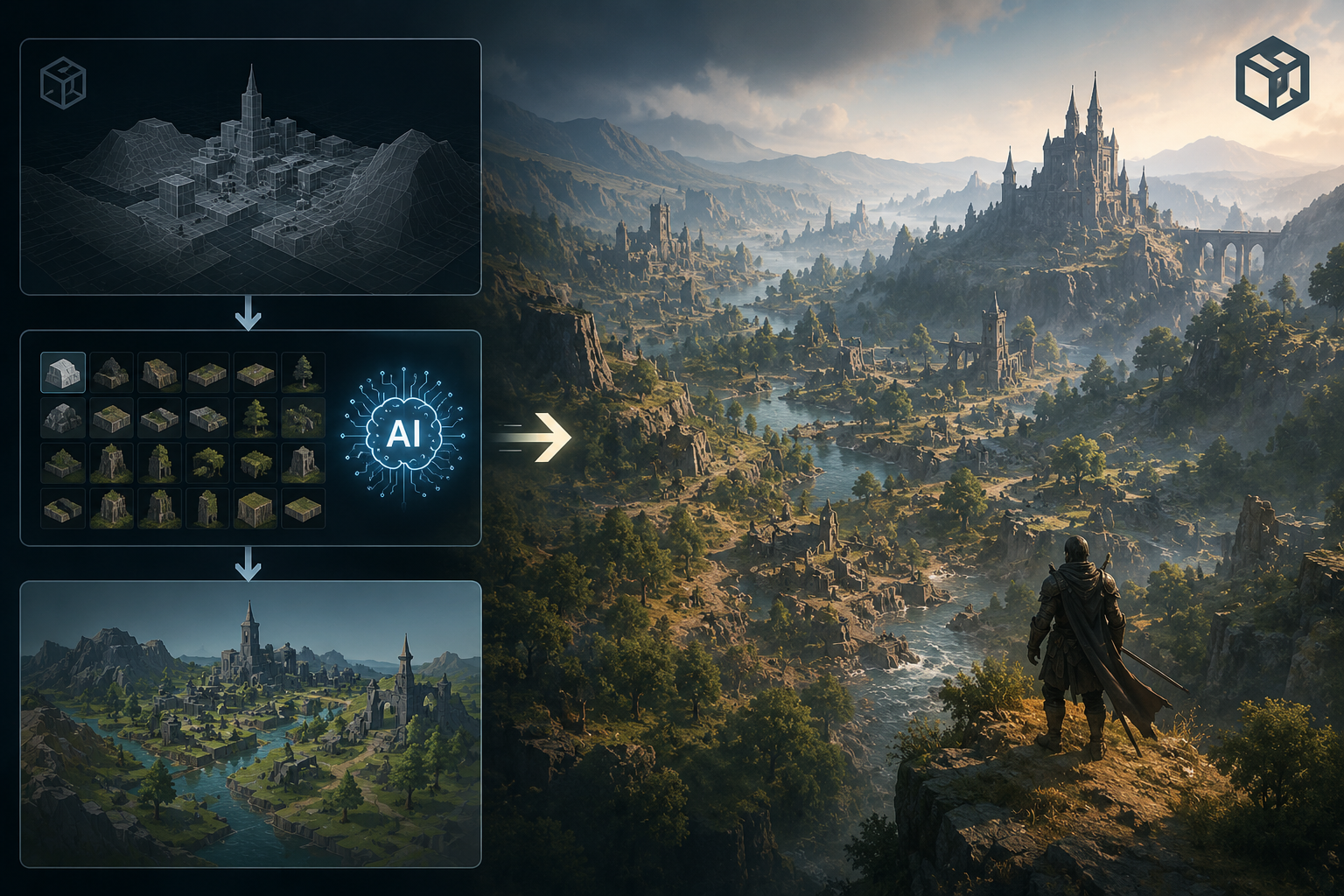
Procedural Generation on Steroids: Designers use text-to-3D and parametric AI tools to instantly spawn terrain, foliage distributions, and weather-beaten textures based on specific biome rules.
Iterative Design: If a team decides a level feels too restrictive, the designer can use AI brushes to dynamically expand a mountain range or automatically recalculate the pathfinding nodes (NavMesh) for enemy AI.
The Career Shift: Level design has shifted from tedious manual object placement to high-level curation. Designers spend less time placing individual virtual rocks and more time focus-testing the pacing, sightlines, and emotional flow of a map.
One of the most exciting shifts in 2026 is the death of rigid, predictable Non-Playable Characters (NPCs). Generative AI is transforming how writers and audio designers build game worlds.
Context-Aware Dialogues: Instead of writing thousands of lines of static branching text, narrative designers feed an NPC a personality profile, background lore, and emotional constraints. AI tools then generate dynamic, contextual dialogue on the fly based on what the player is wearing or doing.
Rapid Asset Mockups: UI/UX designers and concept artists use generative image tools to quickly pitch UI layouts or character concept boards during morning meetings, cutting down the approval pipeline from days to minutes.
With AI automating the mechanical elements of game development, how do you stand out to studios hiring in 2026?
Studios are no longer impressed by a basic portfolio showing a single asset or a simple script. Build a project that demonstrates scale. Showcase how you used AI tools to build an entire polished micro-game by yourself in a weekend. Show your prompts, your debugging process, and your final architectural polish.
AI can write code snippets, but it cannot compile, optimize, or deploy a stable game. You still need deep, foundational knowledge of industry-standard tools like Unreal Engine and Unity. You must know how memory management works, how to optimize frame rates, and how to utilize physics systems.
Self-learning through old YouTube tutorials will leave you steps behind the current industry standard. To get hired, you need to train in an environment that actively integrates these modern AI workflows into traditional game development logic.
The gaming industry isn't shrinking; it is accelerating. The barrier to entry for creating massive, beautiful games has never been lower—if you know how to wield the right tools.
At The Upthrust, our game development batches are explicitly designed for the modern industry. We don't just teach you how to write code; we teach you how to manage projects, build robust systems, and leverage cutting-edge tech to launch your career.
👉 Ready to build the future? Explore The UpThrust’s Game Development Courses today and book a free counseling session with our industry experts!
Book a free counselling session with our mentors
Explore trending topics and fresh ideas. Grow your knowledge with every article.
Is game development a good career in India? See real salary data, top roles, required skills, and a step-by-step roadmap to get job-ready.
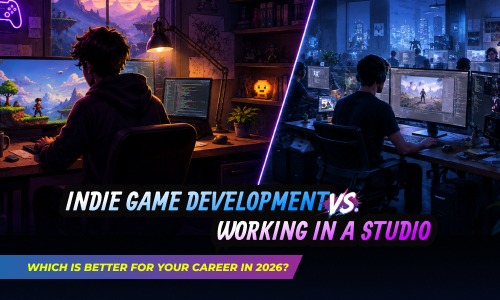
Compare indie game development vs studio careers in 2026 across pay, skills, creative control, work-life balance, networking, and options for students for 2026.
Practical game development and marketing tips in your inbox every week.